
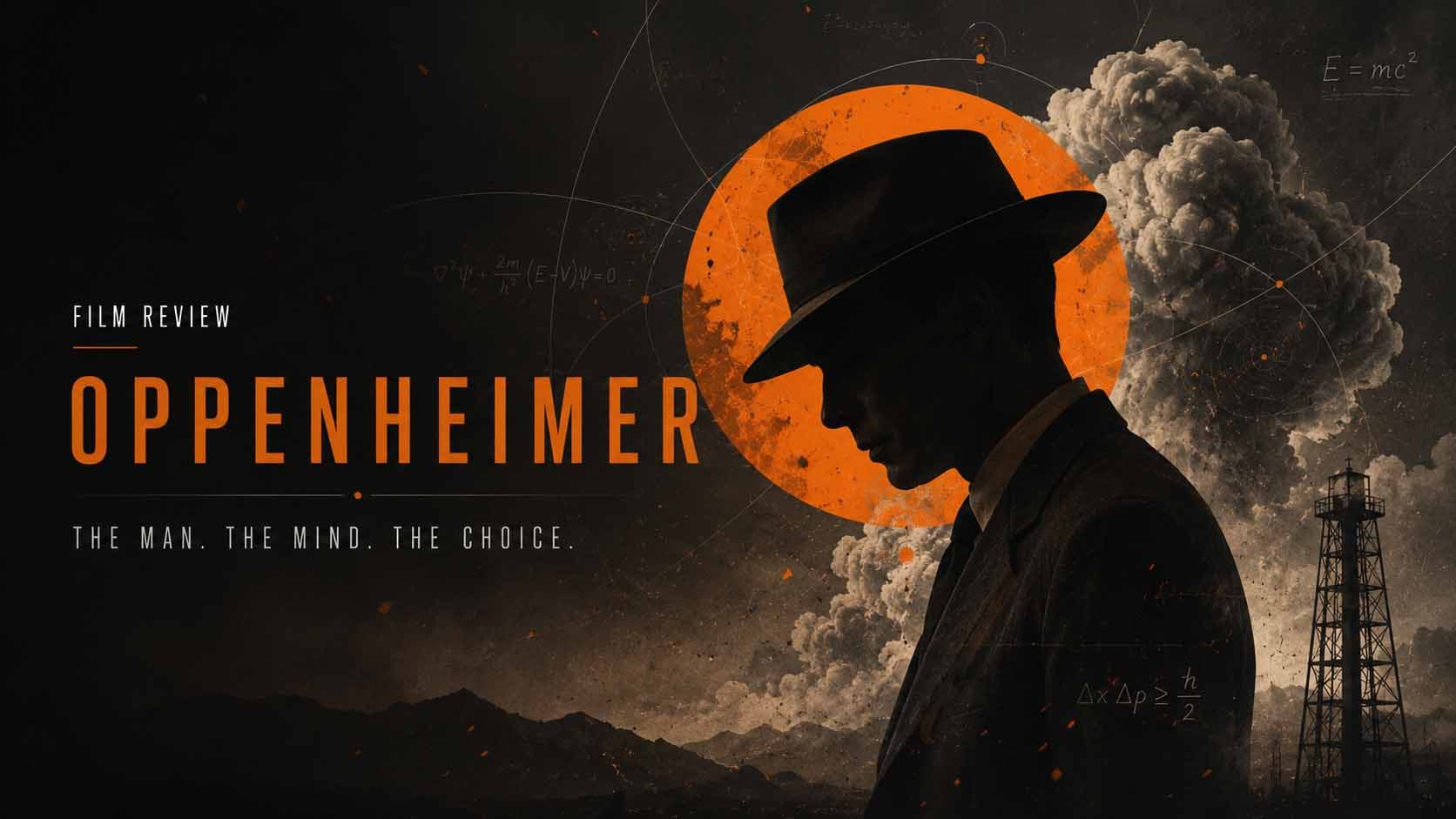
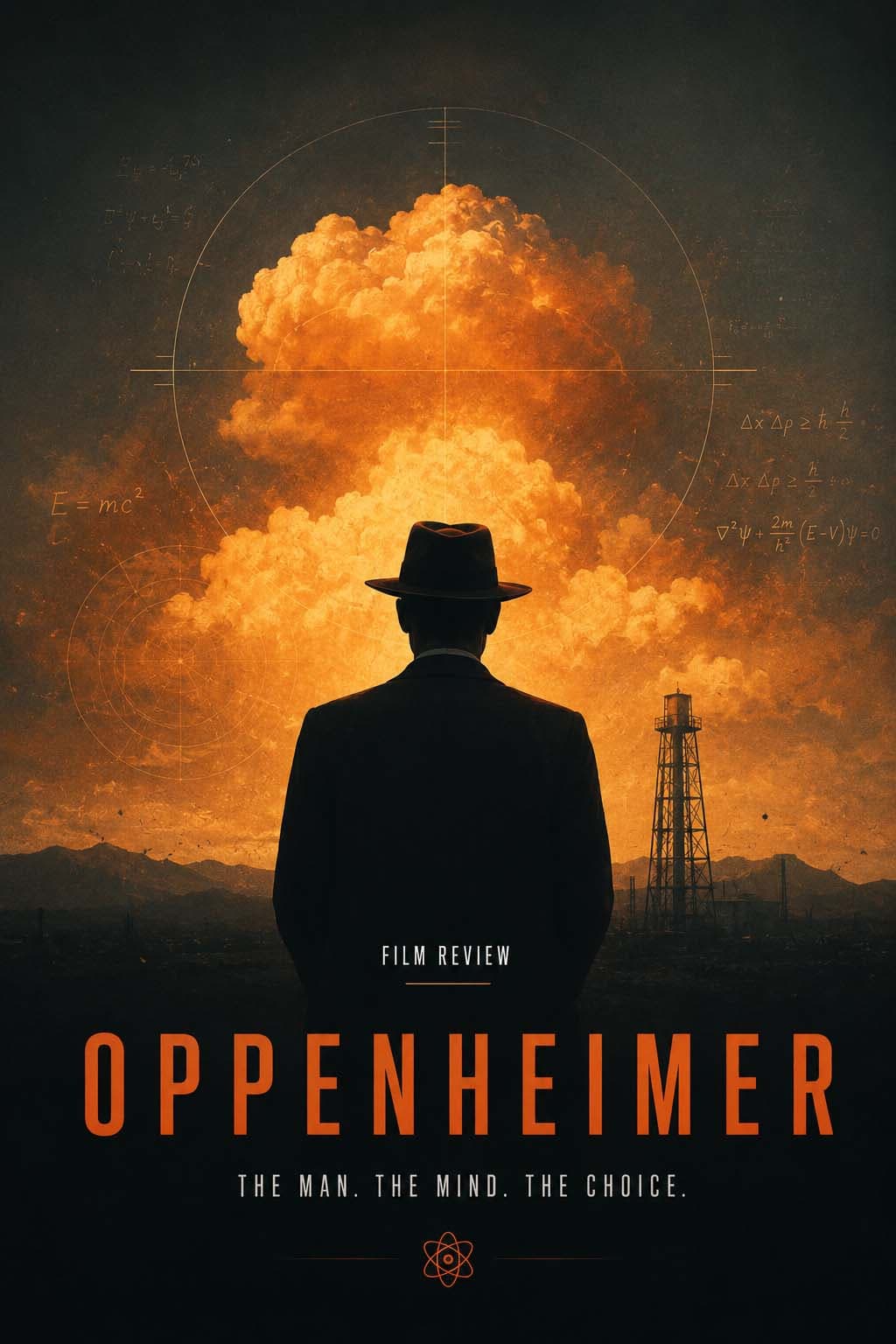
Oppenheimer Review & Analysis
Nolan's three-hour biography argues that the 20th century's defining scientist was also its most famous unreliable narrator — and the film is the better for refusing to sanitize him.
Christopher Nolan
Jul 19, 2023
Quick Verdict
“The most ambitious studio film of the 2020s. Cillian Murphy is the anchor, but the film's real achievement is its refusal to let the audience decide whether to forgive its subject.”
Plot Summary
J. Robert Oppenheimer leads the Manhattan Project to build the atomic bomb at Los Alamos, then watches postwar America turn its own architecture of secrecy against him. The film braids three timelines — the young physicist, the wartime administrator, and the 1954 security-clearance hearing — into a single psychological portrait of a man who chose, and then could not un-choose.
Full Breakdown
A biopic structured like an interrogation
Nolan's screenplay, adapted from Kai Bird and Martin J. Sherwin's American Prometheus, rejects the cradle-to-grave biopic structure and instead uses the 1954 hearing as a cross-examination of the entire life. The film's three timelines are not flashbacks — they are testimony. That choice gives the material a forensic intensity most biographical dramas cannot access.
The subject is also held accountable. Oppenheimer is not softened, not redeemed, and not reduced to a symbol of regret. He is shown as a man whose political naïveté, personal evasions, and genuine brilliance were all present in the same decisions. Very few studio films this expensive allow their protagonist that much moral weight.
Cillian Murphy plays interiority at a level few actors attempt
Murphy's performance is the quietest center of any three-hour film in recent memory. He plays Oppenheimer's charisma and his paralysis simultaneously, and the camera's willingness to sit on his face for long stretches works because there is actually something there to watch.
Robert Downey Jr.'s Lewis Strauss is the film's structural counterweight and his best work in a generation. Emily Blunt's Kitty, initially confined to the margins, reclaims the film in the late-stage hearing sequences with a single scene that recalibrates the whole preceding hour.
Hoyte van Hoytema, Ludwig Göransson, and the Trinity sequence
Hoyte van Hoytema's 65mm photography treats faces as landscape. The film's enormous close-ups — Oppenheimer's eyes during quantum imagery, Strauss's micro-expressions in the hearing — are the decade's best argument for large-format biography.
Ludwig Göransson's score escalates like anxiety. The Trinity test sequence, where Nolan holds sound out and then detonates it, is one of the great formal choices in contemporary cinema. Jennifer Lame's editing across three timelines is the film's secret structural achievement.
Pros and cons
Pros: Cillian Murphy's career-defining performance; the three-timeline structure pays off in full; IMAX 70mm photography that justifies its own format.
Cons: The 180-minute runtime is a real commitment; dialogue density assumes sustained attention; viewers expecting a traditional war or science biopic will be surprised by how interior the film is.
What Hits
- Exceptional execution of biography, drama, history tropes
- Stunning cinematography and production design that demands a large screen
- A compelling lead performance that anchors the entire narrative
Pressure Points
- A few minor subplots feel slightly underdeveloped
- May feel overly familiar to long-time fans of the genre
97
Primary Cast
Featured Actors
Production Specs
Technical Details
Join the discussion
Most viewed today

Features · 6 min
The Brutalist Is a Three-and-a-Half-Hour Dare — And It Earns Every Single Minute
News · 7 min
The mid-budget theatrical film is quietly winning 2026

News · 3 min
Christopher Nolan Taps Matt Damon and Zendaya for His Most Secretive Project Yet
News · 6 min